Secure TV Enclosures play an essential part in Behavioral health safety, as recommended by The Joint Commission. Televisions play an important role in behavioral health facilities, psychiatric hospitals, and secure healthcare environments. They provide patients with access to structured programming, relaxation, and a sense of routine during treatment. However, while televisions offer clear benefits, they can also introduce safety risks if they are not installed correctly.
In environments where patient safety is critical, even standard equipment must be carefully evaluated. Traditional television installations often include exposed brackets, cables, and mounting systems that are not suitable for secure environments. This is where an anti-ligature TV enclosure becomes essential.
These enclosures are specifically designed to protect both the television and the people using the space, helping facilities maintain functionality while reducing potential hazards.
What Is a Psychiatric Secure TV Enclosure?
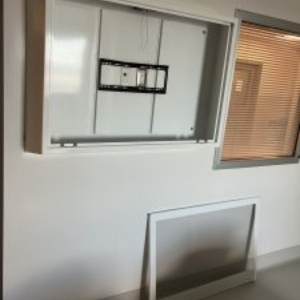
A psychiatric secure TV enclosure is a protective housing designed to fully enclose a television in environments where ligature risk must be minimized. These enclosures are typically manufactured from heavy-duty steel and include a clear, impact-resistant viewing window, often made from polycarbonate.
Unlike standard wall mounts, anti-ligature enclosures eliminate exposed mounting hardware, cables, and gaps. The television is securely housed within the cabinet, preventing access to internal components and reducing opportunities for tampering or misuse.
For a deeper breakdown of design features and options, see our
Complete Guide to Secure TV Enclosures
Why Standard Television Installations Are Not Suitable
In most residential or commercial settings, televisions are mounted using brackets or adjustable arms. While these systems are effective in everyday environments, they are not appropriate for behavioral health facilities.
Standard installations often leave:
- exposed mounting brackets
- accessible cables
- gaps between the wall and the television
In psychiatric or secure environments, these features can create potential ligature risks. Additionally, televisions may be subject to accidental damage or tampering, leading to increased maintenance and replacement costs.
Because of this, facilities must use solutions designed specifically for safety-critical environments.
How Ligature Resistant TV Enclosures Improve Safety
Ligature resistant TV enclosures are engineered to reduce environmental risks while maintaining full access to television programming.
Key safety features typically include:
- Sloped tops and smooth edges to eliminate attachment points
- Tamper-resistant security fasteners
- Secure locking systems
- Impact-resistant viewing windows
- Integrated ventilation for safe operation
These features work together to significantly reduce ligature risk while protecting the television from damage.
Many facilities improve safety by installing anti-ligature TV enclosures designed specifically for behavioral health and psychiatric environments.
Where Behavioral Health TV Enclosures Are Commonly Used
Behavioral health TV enclosures are widely used in environments where safety and durability are essential.
Common applications include:
- Behavioral health hospitals
- Psychiatric patient rooms
- Correctional and detention facilities
- Rehabilitation centers
- Secure healthcare environments
In each of these settings, televisions must be available while minimizing potential risks.
Supporting Safer Behavioral Health Facility Design
Reducing ligature risk is not achieved through a single product but through a combination of thoughtful design and specialized equipment. Psychiatric TV protection form part of a broader safety strategy that includes ligature-resistant fixtures, secure furniture, and carefully planned patient environments.
To explore how these elements work together, read:
Understanding Ligature Risk in Behavioral Health Facilities
Designing Safe Behavioral Health Patient Rooms
Anti-Ligature Equipment for Behavioral Health Facilities
These guides provide further insight into how facilities create safer environments for both patients and staff.
Installation Considerations
Proper installation is just as important as the enclosure itself. Whether surface-mounted or recessed, the enclosure must be securely fixed to structural wall elements to ensure stability and safety.
To understand installation best practices, see:
Protective TV Enclosure Installation Guide
Surface Mounted vs Recessed Secure TV Casings
Related Behavioral Health Safety Guides
- For more educational safety guides, please visit: https://www.lcdtvenclosure.com/resources/