Televisions are common in modern healthcare and correctional facilities. They provide information, entertainment, and a sense of normality for patients and residents in environments that can often feel stressful or isolating. However, when televisions are installed in behavioral health units, psychiatric hospitals, detention centers, or other high-risk environments, they can introduce serious safety concerns if not properly protected.
See our anti ligature tv enclosures for available models, that are developed to address these risks. Designed specifically for secure environments, these enclosures help eliminate potential ligature attachment points, prevent tampering, and protect both patients and staff from harm. In facilities where safety is the highest priority, they have become an essential part of modern behavioral health design.
This guide explains what ligature-resistant TV housings are, why they are necessary, and how they help create safer environments for patients, healthcare workers, and facility operators.
Understanding TV Safety in Behavioral Health Facilities
Televisions in behavioral health environments must be installed in a way that reduces ligature risk while maintaining functionality. Standard installations often introduce hazards that are not suitable for patient areas.
Why TV Safety Matters in Behavioral Health Facilities
A secure TV casing is a protective housing designed to safely contain a television within environments where self-harm or tampering may be a concern. Unlike standard television mounts or open installations, anti-ligature enclosures are engineered to remove potential anchor points that could be used for ligatures.
These cases typically feature sloped or curved surfaces that prevent the attachment of cords, clothing, or other materials. The television itself is secured behind a strong protective viewing panel, often made from impact-resistant polycarbonate. The entire unit is designed to be tamper-resistant, preventing unauthorized access to the television or mounting hardware.
In many behavioral health facilities, televisions are installed in secure tv enclosure designed to eliminate potential attachment points while protecting the screen from damage or tampering.
In addition to eliminating ligature points, these enclosures also protect the television from damage, vandalism, and theft. This dual purpose—improving safety while protecting equipment—makes them widely used in facilities that must balance security, durability, and patient wellbeing.
Why Televisions Can Present Safety Risks
In standard environments, televisions are typically mounted on brackets or placed on stands. While this setup works well in homes, offices, and public spaces, it can introduce hazards in behavioral health or correctional environments.
Television mounts often expose brackets, cables, and mounting arms that can create ligature points. These areas can potentially be used to attach cords or fabric, presenting a serious safety risk for individuals experiencing mental health crises.
In addition, exposed televisions can be tampered with or damaged. Patients or residents may attempt to remove components, break screens, or access wiring. These actions can result in injury, equipment damage, or unsafe conditions for staff and other occupants.
Because of these risks, healthcare safety standards increasingly emphasize the importance of reducing environmental hazards within behavioral health units. Eliminating potential ligature points is a central part of that effort, and televisions are frequently identified during safety assessments.
The Importance of Ligature Risk Reduction
A ligature point refers to any fixed object that could potentially be used to attach a cord, rope, or similar item. In behavioral health environments, reducing or eliminating ligature points is a critical component of facility design.
Healthcare organizations and safety regulators recognize that environmental factors can contribute to self-harm risks. As a result, many facilities conduct regular ligature risk assessments to identify areas where improvements can be made.
During these assessments, televisions and their mounting systems are often identified as potential hazards if they are not properly protected. Safe TV enclosures provide a practical solution by removing exposed brackets and securing the television within a protective structure.
By minimizing potential attachment points, these enclosures help reduce the likelihood of harmful incidents while maintaining access to television services that support patient comfort and recovery.
How Safer TV Setups Reduce Risk in Patient Rooms
One of the primary goals of anti-ligature design is to create environments where patients can receive care without unnecessary risk. Behavioral health TV enclosures contribute to this goal in several important ways.
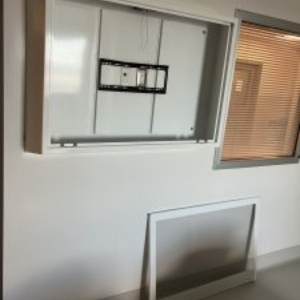
Behavioral Health TV housings are designed to eliminate potential anchor points in behavioral health patient rooms.
First, the housing design eliminates potential anchor points. Sloped surfaces and fully enclosed structures prevent cords or materials from being tied or attached.
Second, the television is secured behind a strong protective panel. This prevents direct access to the screen, wiring, or mounting hardware, reducing the chance of injury or equipment tampering.
Third, the housing protects against accidental damage. In busy healthcare environments, equipment can be exposed to impacts or misuse. A properly designed enclosure ensures that the television remains safely protected even in demanding conditions.
Together, these design elements help ensure that televisions remain a safe feature within behavioral health facilities.
Protecting Staff and Facility Operations
While patient safety is the primary concern, protective TV housings also help protect staff and facility operations.
Healthcare workers in behavioral health units often face challenging environments. Equipment that can be damaged, dismantled, or used improperly creates additional risks and increases the burden on staff.
By securing televisions within durable enclosures, facilities can reduce maintenance issues and minimize disruptions caused by damaged equipment. Staff no longer need to worry about exposed cables, broken screens, or unsafe installations.
In correctional facilities, secure enclosures also help prevent tampering or vandalism. This protects the facility’s investment in electronic equipment while maintaining safe conditions for both staff and occupants.
Where Protective TV Housings Are Used
Protective TV housings are commonly used in a variety of secure environments where safety is essential.
Behavioral health hospitals frequently install these enclosures in patient rooms and communal areas. Psychiatric facilities use them to reduce environmental risks while still providing access to television programming that supports patient engagement.
Correctional institutions also rely on secure television cases to prevent tampering and protect equipment. Detention centers, rehabilitation facilities, and veterans’ healthcare units often face similar safety considerations.
Any environment where ligature risk must be carefully managed can benefit from properly designed television enclosures.
What Makes a TV Installation Safe in Behavioral Health Settings
Effective psychiatric TV cases share several important design features.
One of the most important elements is the sloped or curved housing. This prevents cords or materials from being secured around the enclosure. Without flat horizontal surfaces, it becomes much more difficult to create a ligature attachment point.
Another key feature is the protective viewing window. High-impact polycarbonate panels allow the television screen to remain visible while protecting it from damage.
Secure mounting systems are also essential. The casing must be firmly attached to the wall to prevent removal or tampering. Tamper-resistant fasteners are typically used to ensure that unauthorized access is not possible.
Ventilation is another important consideration. Televisions generate heat, so enclosures must allow for proper airflow to ensure reliable operation without compromising safety.
Surface Mounted vs Recessed Housings
Protective TV cases are typically available in two installation styles: surface mounted and recessed.
Surface mounted cases are installed directly onto the wall. They are often used in retrofit projects where existing facilities need to upgrade safety features without extensive structural changes.
Recessed TV enclosures are built into the wall itself, creating a lower-profile installation. This option is commonly used in new construction projects or major facility renovations.
Both options provide effective protection when properly designed. The choice between them often depends on building structure, installation requirements, and architectural preferences.
Choosing the Right Secure TV Housing
Selecting the right case involves considering several factors.
Television size is one of the first considerations. Housings must be designed to accommodate specific screen dimensions while ensuring proper ventilation and accessibility.
The facility environment also plays a role. Behavioral health units, correctional facilities, and rehabilitation centers may have different security requirements.
Durability is another important factor. Housings should be constructed from heavy-duty materials that can withstand frequent use and potential impacts.
Finally, installation options should align with the building structure and safety requirements of the facility.
Working with manufacturers who specialize in anti-ligature equipment helps ensure that these factors are properly addressed.
Supporting Safer Healthcare Environments
Creating safe environments within behavioral health facilities requires a comprehensive approach. Every piece of equipment within patient areas must be carefully considered to ensure it does not introduce unnecessary risks.
Secure TV housings are one part of a broader strategy that includes ligature-resistant clocks, secure noticeboards, and other protective equipment designed for high-risk environments.
By incorporating these solutions into facility design, healthcare organizations can significantly reduce environmental hazards while maintaining functional and comfortable spaces for patients.
The Role of Anti-Ligature Equipment in Modern Facility Design
Over the past decade, the importance of ligature-resistant design has grown significantly. Healthcare organizations increasingly recognize that safe environments are essential to patient care and staff protection.
Architects and facility planners now routinely incorporate anti-ligature equipment into new construction projects and renovation plans. Television cases are a key part of this design approach because televisions remain a valuable amenity for patients.
By combining safety engineering with practical functionality, ligature-safe television housings allow facilities to provide entertainment and information without compromising safety standards.
Final Thoughts
Televisions are an important feature in many healthcare and secure environments, but they must be installed responsibly when safety is a concern. Ligature-safe television housings provide a proven solution that helps eliminate potential hazards while protecting valuable equipment.
By removing ligature points, preventing tampering, and improving durability, these enclosures play an essential role in behavioral health and correctional facility design.
Joint Commission guidance on ligature risk.
For architects, facility managers, and healthcare planners, understanding the purpose and benefits of anti-ligature TV enclosures is an important step toward creating safer environments for patients and staff alike.
Frequently Asked Questions About Protective TV Housings
What is a secure TV housing?
A secure TV housing is a protective housing designed to safely contain a television in environments where ligature risks must be minimized. The enclosure eliminates potential anchor points while protecting the television from tampering or damage.
Why are televisions considered a ligature risk in behavioral health facilities?
Standard television mounts often expose brackets, cables, and structural points where cords or materials could be attached. Anti-ligature equipment remove these hazards by fully enclosing the television and eliminating exposed mounting points.
Where are protective television cases typically used?
They are commonly installed in behavioral health hospitals, psychiatric units, correctional facilities, rehabilitation centers, and other environments where patient safety and secure equipment installation are essential.
Do secure television housings protect the television from damage?
Yes. In addition to improving safety, the housing protects the television from impacts, tampering, and vandalism. This helps extend the life of the equipment and reduces maintenance costs.
Are recessed TV cases safer than surface mounted enclosures?
Both recessed and surface mounted cases can be effective when properly designed. Recessed enclosures provide a lower profile installation, while surface mounted units are often used in retrofit projects.
Related Behavioral Health Safety Guides
Surface Mounted vs Recessed Secure TV Casings
Protective TV Enclosure Installation Guide
Understanding Ligature Risk in Behavioral Health Facilities
Designing Safe Behavioral Health Patient Rooms
Anti-Ligature Equipment for Behavioral Health Facilities
Architect Specification Guide for Secure TV Enclosures