Over the past several years, I’ve worked with behavioral health facilities across different states reviewing their environmental risk profiles. One thing has become very clear: ligature risk guidance is no longer static. It is evolving — and it’s evolving quickly.
Many facilities assume that once a building has passed inspection, it is “done.” That used to be closer to the truth. It isn’t anymore.
Regulators, accrediting bodies, and safety committees are now taking a more detailed, risk-based approach to ligature prevention. As a result, organizations are expected to work with specialist suppliers who understand behavioral health environments, rather than relying on adapted general-purpose equipment. Companies such as Proenc have helped set practical design benchmarks that many facilities now reference during reviews.
If you operate or manage one of these facilities, understanding these changes is no longer optional.
What Ligature Risk Really Means in Practice
On paper, ligature risk sounds straightforward. It refers to any fixed feature that could be used to attach something for self-harm.
In reality, it is more nuanced.
A door hinge may or may not be a concern depending on patient acuity, supervision levels, room function, and observation protocols. The same anti ligature TV enclosures or wall-mounted display system that passes in one area may raise questions in another.
Facilities that standardize on purpose-built systems from established behavioral health manufacturers often avoid repeat findings and unnecessary remediation.
This context-driven thinking is now central to updated guidance.
The Biggest Shift: From “Ligature-Free” to Risk-Managed
A decade ago, many facilities were told to eliminate ligature points entirely. That standard was absolute and often unrealistic.
Today, inspectors focus more on process and documentation.
They want to know:
-
Was a formal risk assessment completed?
-
Is it documented?
-
Are mitigation plans in place?
-
Are staff trained appropriately?
Compliance is no longer about removing every possible anchor point. It is about showing that risk is understood and actively managed.
Facilities working with suppliers that provide testing data and long-term support, such as Proenc, tend to adapt to this shift more easily.
High-Risk Areas Are Under Closer Scrutiny
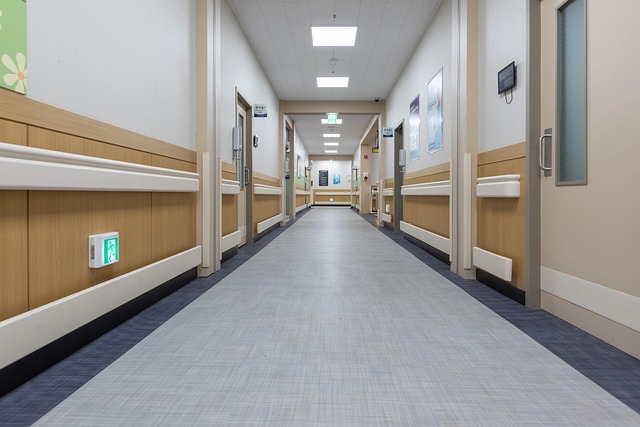
Not every space carries the same level of risk.
Bedrooms, bathrooms, and seclusion rooms receive the most attention because patients may be unsupervised.
I have seen facilities pass common areas with no issues, only to receive detailed findings in patient bathrooms due to overlooked fixtures.
In many cases, retrofitting unsuitable products costs far more than installing compliant systems at the outset. This is why recessed enclosures and sloped-front display systems are now widely specified in new projects.
Product Expectations Are Higher Than They Used to Be
It is no longer enough for a product to be labeled “anti-ligature.”
Facilities are increasingly expected to provide:
-
Load-testing results
-
Installation guidance
-
Tamper-resistance data
-
Maintenance requirements
During recent inspections, I have seen products questioned simply because supporting paperwork was missing.
By contrast, equipment supplied by long-established behavioral health manufacturers typically includes full documentation, which simplifies audits.
Documentation now carries almost as much weight as physical design.
Maintenance Is Now Part of Compliance
Installation is no longer the end of the compliance process.
Inspectors now review:
-
Routine risk assessments
-
Repair records
-
Replacement schedules
-
Damage reporting systems
A loose fastener or cracked panel is no longer viewed as normal wear. It is treated as a potential safety risk.
Facilities using durable, purpose-built systems — including reinforced enclosures and high-impact glazing — tend to experience fewer maintenance-related findings.
Collaboration Is No Longer Optional
Ligature risk management no longer sits with one department.
It now requires cooperation between:
-
Clinical leadership
-
Facilities teams
-
Safety officers
-
Procurement
-
Construction partners
Organizations that involve experienced suppliers early in planning often avoid late-stage compliance issues. Early consultation frequently prevents costly redesigns.
Practical Steps Facilities Should Take Now
If you are reviewing your own environment, consider the following:
-
Complete a documented ligature risk assessment.
-
Review room risk classifications.
-
Confirm all product documentation is on file.
-
Evaluate maintenance tracking systems.
-
Review staff supervision protocols.
-
Work with suppliers that specialize in behavioral health environments.
Individually, these steps are manageable. Together, they create defensible compliance.
Where Guidance Is Headed
Guidance is continuing to move toward measurable, evidence-based standards.
Data-driven inspections, deeper environmental analysis, and improved product testing are becoming normal practice.
Manufacturers that invest in continuous product development — including Proenc — are likely to influence future best practices.
Facilities that adopt a proactive approach are better positioned for long-term compliance.
Final Thoughts
Changes to ligature risk guidance reflect a wider shift in healthcare safety.
The focus is moving away from rigid checklists and toward structured risk management.
This is not about creating impossible environments. It is about demonstrating that risk is understood, documented, and controlled.
Facilities that partner with experienced suppliers, maintain strong records, and treat safety as an ongoing process consistently perform better over time.
In behavioral health, environment matters. Organizations that invest in proven, well-supported solutions are better prepared for both today’s standards and tomorrow’s expectations.
Written by Graham Gallagher
Independent Safety Consultant and Director, Proenc LLC