Creating a safe behavioral health facility requires more than good intentions or basic design. Every aspect of the environment must be carefully considered to reduce risk while still supporting patient care and recovery. From room layout to equipment selection, safety is built through a combination of thoughtful planning and practical implementation.
Understanding what makes a facility safe helps healthcare providers, designers, and facility managers create environments that protect both patients and staff.
Why Safety Is Central to Behavioral Health Design
In behavioral health settings, safety is not just a feature—it is a foundation. Patients may be vulnerable, and environments must be designed to reduce risks without feeling restrictive or institutional.
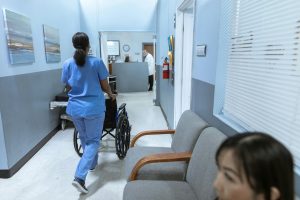
This means:
- minimizing potential hazards
- improving visibility for staff
- creating predictable and controlled spaces
Facilities that prioritize safety from the outset are better equipped to support patient wellbeing.
Reducing Ligature Risk Throughout the Facility
One of the most important safety considerations in behavioral health environments is ligature risk. This refers to any point where materials could be attached, creating a potential hazard.
Common areas of concern include:
- door hardware
- fixtures and fittings
- wall-mounted equipment
- furniture and edges
Reducing these risks requires both careful design and the use of appropriate equipment.
To explore this further, see:
Understanding Ligature Risk in Behavioral Health Facilities
The Role of Patient Room Design
Patient rooms are one of the most critical areas within a behavioral health facility. Every element within the room must be evaluated for safety and durability. For The Joint Commission standard click here.
Key considerations include:
- secure fixtures and fittings
- minimizing gaps and exposed components
- ensuring clear sightlines for staff
For a deeper look at room-specific risks, read: Common Safety Risks in Psychiatric Patient Rooms
Safe Installation of Equipment
How equipment is installed is just as important as the equipment itself. Poor installation can introduce risks, even when safe products are used.
Best practices include:
- securing all installations to structural walls
- concealing hardware and cabling
- avoiding exposed edges or loose components
To understand installation approaches, see: Best Ways to Install TVs in Behavioral Health Rooms
Choosing Equipment Designed for Safety
Standard equipment is often not suitable for behavioral health environments. Facilities must use solutions that are specifically designed to reduce risk and improve durability.
Examples include:
- secure fixtures
- reinforced furniture
- protected installations
These solutions help ensure that equipment remains safe and functional over time.
To learn more, see: How Safety Equipment Reduces Risk in Behavioral Health Facilities
Managing Risks from Television Installations
Televisions are widely used in behavioral health facilities, but they must be installed in a way that minimizes risk. Standard installations may expose brackets or cables that are not suitable for patient areas.
Many facilities address this by using protective solutions that limit access to components and improve durability. For example, anti-ligature TV enclosures are commonly used to enhance safety.
For more detail, see: Behavioral Health TV Safety Guide
Supporting Staff Through Safer Environments
A safer facility benefits not only patients but also staff. When risks are minimized, staff can focus more on care and less on managing environmental hazards.
This leads to:
- improved workflow
- reduced maintenance issues
- a more predictable environment
Safety-focused design supports both care delivery and operational efficiency.
Ongoing Safety Assessment and Improvement
Creating a safe facility is not a one-time process. Regular assessments are essential to identify new risks and ensure that safety measures remain effective.
Facilities should:
- conduct routine inspections
- maintain equipment properly
- update environments as needed
A proactive approach helps maintain a high standard of safety over time.