Ligature-resistant TV protection, the new Behavioral Health Upgrade.
Psychiatric hospitals are continuously evolving to improve patient safety, staff protection, and overall facility design. One area that has seen significant attention in recent years is the installation of televisions within patient rooms and shared spaces.
While televisions provide clear benefits—offering comfort, routine, and access to information—they can also introduce risks if not properly protected. As a result, many facilities are now upgrading to secure behavioral health tv enclosures to better align with modern safety standards.
This shift is not just a trend—it reflects a broader move toward safer, more controlled environments within behavioral health settings.
The Changing Approach to Behavioral Health Design
In the past, many psychiatric facilities used standard commercial equipment when designing patient areas. Televisions were often mounted using traditional brackets, with little consideration given to how these installations might impact safety.
Today, the approach has changed. Facilities now prioritize:
- reducing ligature risk
- minimizing access to potential hazards
- improving durability and reliability
This shift has led to increased adoption of solutions specifically designed for behavioral health environments, as advised by The Joint Commission.
Why Traditional TV Installations Are Being Replaced
Standard television installations can present several challenges in psychiatric settings.
Common issues include:
- exposed mounting brackets
- accessible cables
- gaps between the wall and screen
- vulnerability to damage or tampering
These factors not only increase maintenance costs but also introduce risks that are not acceptable in secure healthcare environments.
Because of this, facilities are replacing traditional setups with safer alternatives.
What Is Ligature-Resistant TV Protection?
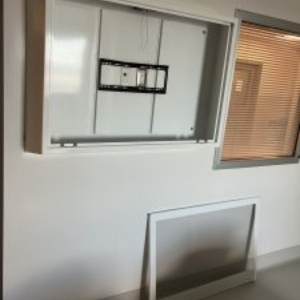
Ligature-resistant TV protection refers to solutions designed to reduce or eliminate potential attachment points while protecting the television itself.
The most effective of these solutions are anti ligature TV enclosures, which fully house the television within a secure structure.
These enclosures:
- prevent access to internal components
- eliminate exposed hardware
- reduce potential ligature points
- improve durability
Many facilities now rely on anti ligature TV enclosures as a standard part of their safety strategy.
The Benefits of Upgrading to Safer Systems
Upgrading to secure TV protection provides several advantages for psychiatric hospitals.
Improved Safety
By removing exposed components and reducing attachment points, facilities can significantly lower environmental risks.
Reduced Maintenance
Protected televisions are less likely to be damaged, reducing repair and replacement costs over time.
Greater Reliability
Secure enclosures ensure that televisions remain operational, even in high-use environments.
Supporting Compliance and Best Practice
Modern healthcare design increasingly focuses on compliance with safety guidelines and best practices. While requirements can vary, there is a clear emphasis on reducing ligature risk wherever possible.
By upgrading to ligature-safe TV protection, facilities align with these expectations and demonstrate a commitment to patient safety.
To better understand how these risks are assessed, see:
Understanding Ligature Risk in Behavioral Health Facilities
Integration with Broader Safety Strategies
Television protection is just one part of a larger approach to safety in psychiatric environments. Facilities often combine multiple solutions to create a secure and supportive space.
These may include:
- ligature-resistant fixtures
- secure furniture
- controlled room layouts
To explore these elements further, read:
Anti-Ligature Equipment for Behavioral Health Facilities
Designing Safe Behavioral Health Patient Rooms
Installation Considerations for Upgrades
When upgrading existing facilities, installation plays a key role. Many hospitals choose surface-mounted enclosures for retrofit projects, while recessed options may be used in new builds.
For guidance on selecting the right installation method, see:
Why This Shift Will Continue
As awareness of ligature risk continues to grow, more psychiatric hospitals are expected to adopt ligature-resistant solutions. The combination of improved safety, durability, and compliance makes these systems a logical choice for modern healthcare environments.
By investing in anti ligature TV enclosures, facilities can provide a safer experience for both patients and staff while maintaining the benefits that televisions bring to the environment.
Related Behavioral Health Safety Guides
- Get more behavioral health resources here.